Thursday, 4 March 2021

Prigogine Award 2021

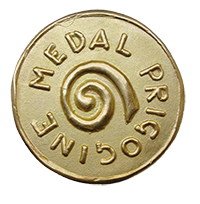
Prigogine MedalThe Prigogine Medal Ceremony for the presentation of the 2020 and 2021 awards were due to take place during the Air Pollution 2021 conference. However, the ceremonies were postponed to 2022 due to COVID-19.

The Prigogine Award was established by the University of Siena and the Wessex Institute of Technology in 2004 to honour the memory of Professor Ilya Prigogine, Nobel Prize Winner for Chemistry.

Ilya Prigogine

Ilya Prigogine was born in Moscow in 1917 and obtained his undergraduate and graduate education in chemistry at the Free University in Brussels. He was awarded the Nobel Prize for his contribution to non-equilibrium thermodynamics, particularly the theory of dissipative structures. The main theme of his scientific work was the role of time in the physical sciences and biology. He contributed significantly to the understanding of irreversible processes, particularly in systems far from equilibrium. The results of his work have had profound consequences for understanding biological and ecological systems.

Prigogine’s ideas established the basis for ecological systems research. The Prigogine Medal to honour his memory is awarded annually to a leading scientist in the field of ecological systems. All recipients have been deeply influenced by the work of Prigogine.

Previous Prigogine Laureates:

2004 Sven Jorgensen, Denmark
2005 Enzo Tiezzi, Italy
2006 Bernard Patten, USA
2007 Robert Ulanowicz, USA
2008 Ioannis Antoniou, Greece
2009 Emilio del Giudice, Italy
2010 Felix Müller, Germany
2011 Larissa Brizhik, Ukraine
2012 Gerald Pollack, USA
2013 Vladimir Voeikov, Russia
2014 Mae-wan Ho, UK
2015 Bai-Lian Larry Li, USA
2016 Brian Fath, USA
2017 João Carlos Marques, Portugal
2018 Stuart Kauffman, USA
2019 Luc Montagnier, Switzerland
2020 Diederik Aerts, Belgium (to be awarded at the 2021 ceremony)

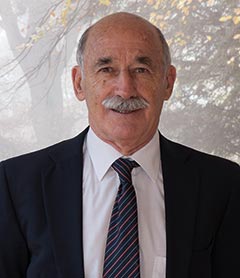
The 2021 Medal will be awarded to Simone Bastianoni, University of Siena, Italy.
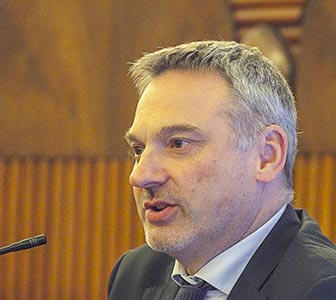

Diederik AertsSimone Bastianoni

After completing classical high school studies, Simone Bastianoni received his master degree in Electronic Engineering at the University of Padova (1990) and then entered the PhD program in Chemical Sciences at the University of Perugia, Italy. During this period, he was visiting scholar at the University of Florida (in 1993) under the supervision of prof. H.T. Odum. He wrote a dissertation on the Development of Novel Thermodynamic Indicators for the Investigation of Ecological Systems under the supervision of Prof. Enzo Tiezzi. He obtained his PhD degree in 1995.

After a career at the University of Siena working in Prof. Tiezzi’s group (with a period as visiting scientist at the Royal Danish School of Pharmacy with S.E. Jørgensen, in 1999), Prof. Bastianoni has been Co-director of the Ecodynamics Group, together with Prof. Nadia Marchettini, since Prof. Tiezzi’s death in 2010. This transdisciplinary group includes chemists, economists, biologists, environmental scientists, architects and engineers (www.ecodynamicsgroup.unisi.it). He is currently full professor of Environmental Chemistry, Chair of the PhD School in Environmental, Geological and Polar Sciences and Provost for Sustainability at the University of Siena.

Prof. Bastianoni has 30 years of experience in investigating sustainability indicators, adopting a holistic view, common to thermodynamics and ecology, including the evaluation of eMergy, eXergy, Ecological Footprint, Life Cycle Assessment (LCA), and greenhouse gases balance. He has identified the relationship between emergy and exergy as a key indicator for understanding the degree of organization of ecosystems and then enlarged this understanding to an input-state-output view of both ecosystems and human ones with applications to sustainability. He has also developed, with other colleagues at the University of Siena. a method for a fast estimation of the greenhouse gases emissions attributed according to a consumer responsibility and a 3D view of the Ecological Footprint that discriminates flows and stocks.

Prof. Bastianoni is a past President of the Emergy Society, Member of the Standard Committee of the Global Footprint Network and Member of the Scientific Board of the International Society of Ecological Modelling. After directing the project that has led the province of Siena to be the first territory of the world to be certified for its greenhouse gases balance, he is now President of the Siena Alliance for Carbon Neutrality (www.carbonneutralsiena.it).

He has published more than 200 papers, with an H-index of 46 (Google Scholar). He is also co-author of several monographs, including:

  • Jørgensen S.E., Fath B.D., Nielsen S.N., Pulselli F.M., Fiscus D.A., Bastianoni S., 2015. Flourishing within limits to growth - Following nature’s way, Routledge, Padstow, UK, 288 pp.
  • Pulselli F.M., Bastianoni S., Marchettini N., Tiezzi E., 2008. The road to sustainability, WIT Press, Southampton, UK; 197 pp.

In 2004 he received the first Prigogine Junior Medal.


Special Prigogine Lecture
on

A Sustainability Viewpoint for a Post Covid-19 Pandemic Society

to be delivered by Professor Simone Bastianoni
at the University of Santiago de Compostela, Spain,
on Wednesday 1st September 2021

A few years ago we published a paper in which we showed a “functional” way of representing sustainability. In reality, it shows the cause-effect relationships between the environmental, social and economic spheres. The environment forms the basis of the system on which man as a species and like all other species is founded and lives. Human society is the core of our interest, and for which we aim at sustainability: nature without humans would go on quite well. The economy represents the "tip of the iceberg" of human society, its productive expression, its "useful output", the expression of how social organization uses resources to make money. At a time when the environmental and social aspects have become equally urgent and with very rapid and equal response times in the three spheres, it is even more important to understand the mechanisms that can lead us out of contradictions and into a more livable world.

The covid-19 pandemic has shown the cause-effect dynamics: a wrong use by humans of the environment (contact with wild animals that should have been be left alone) has triggered a real environmental crisis, i.e. spillover effect. The environmental crisis quickly became a social crisis because the pandemic spread everywhere and caused the need for lockdowns: being "social" suddenly has become a problem. This caused the economic crisis: without a functioning society, production becomes much more difficult. Our interpretation of sustainability in terms of cause-effect relationships already had this type of prediction.

The environment is also recognized as the most important risk factor for the economy also by the World Economic Forum 2020, according to which climatic change, overuse of resources, loss of biodiversity, viruses or new threats to agricultural production are most likely to produce economic crises. Therefore policies that focus only on the economic side, thinking or hoping that the feedback on societies and on the environment will be positive, will turn out to be a hoax. It was probably a model that could fit in an “empty world”, in which the environment could be considered abundant and substantially unchangeable by human actions, not in a 7 billion inhabitants Anthropocene.

The answer is in a model that does not involve a trade-off between good economic performance, good social cohesion and a simply "clean" environment. It envisages managing at the same time the environmental, social and economic aspects as a whole, with a legislative system that recognizes this whole and regulates human actions both towards the economy and towards the environment, to be recognized as an integral part of the system of support of humankind.

In this model there is no room for feedback that is harmful: what comes "back" from the economy and society must be additional nourishment for the environment, reinforcement, not "pollution". The example of plastic in seas and oceans in this sense is striking and despite the fact that scientists have reported this phenomenon for decades, today those who eat fish also eat plastic. Like those who eat meat and vegetables very often also eat antibiotics and pesticides, respectively.

In exiting the COVID emergency we must keep this dynamic in mind. If the solution to get out of the obvious economic crisis is simply to "increase consumption" we will face even greater disasters. Increasing consumption will imply an escalation in environmental stress and therefore a further loss in the quality of life of people, in addition to an intensification in (as already mentioned by the WEF) also economic risks due to environmental problems. The priority of governments must then be the use of the enormous financial resources, made available also by central banks, for the restructuring of the economy together with its physical and social foundations.

Starting from the observation of humanity, as a dissipative structure, is bound to consume energy and resources, our model indicates a precise path, which is also a path of great human and technological development.


For further information about the Prigogine Awards, please contact:

Prigogine Award
Wessex Institute
Ashurst Lodge, Ashurst
Southampton
SO40 7AA, UK

Tel: +44 (0) 238 029 3223

Email: wit@wessex.ac.uk


See the following Web pages for details of the recent Prigogine Awards:

Further details of all Prigogine Awards can be found on our dedicated page: Prigogine Award

Tuesday, 2 March 2021

Prigogine Award 2020 to be presented alongside the 2021 Award

Prigogine MedalThe Prigogine Medal 2020 Award Ceremony was due to take place during the Air Pollution 2020 conference. However, the ceremony was postponed to 2021 due to COVID-19 and will now take along with the presentation of the 2021 Award at the University of Santiago de Compostela on Wednesday 1st September 2020, during the 29th International Conference on Modelling, Monitoring and Management of Air Pollution (Air Pollution 2021).

The Prigogine Medal was established by the University of Siena and the Wessex Institute of Technology in 2004 to honour the memory of Professor Ilya Prigogine, Nobel Prize Winner for Chemistry

Ilya Prigogine

Ilya Prigogine was born in Moscow in 1917 and obtained his undergraduate and graduate education in chemistry at the Free University in Brussels. He was awarded the Nobel Prize for his contribution to non-equilibrium thermodynamics, particularly the theory of dissipative structures. The main theme of his scientific work was the role of time in the physical sciences and biology. He contributed significantly to the understanding of irreversible processes, particularly in systems far from equilibrium. The results of his work have had profound consequences for understanding biological and ecological systems.

Prigogine’s ideas established the basis for ecological systems research. The Prigogine Medal to honour his memory is awarded annually to a leading scientist in the field of ecological systems. All recipients have been deeply influenced by the work of Prigogine.

Previous Prigogine Laureates:

2004 Sven Jorgensen, Denmark
2005 Enzo Tiezzi, Italy
2006 Bernard Patten, USA
2007 Robert Ulanowicz, USA
2008 Ioannis Antoniou, Greece
2009 Emilio del Giudice, Italy
2010 Felix Müller, Germany
2011 Larissa Brizhik, Ukraine
2012 Gerald Pollack, USA
2013 Vladimir Voeikov, Russia
2014 Mae-wan Ho, UK
2015 Bai-Lian Larry Li, USA
2016 Brian Fath, USA
2017 João Carlos Marques, Portugal
2018 Stuart Kauffman, USA
2019 Luc Montagnier, Switzerland

The 2020 Medal will be awarded to Professor Diederik Aerts, Brussels Free University, Belgium.


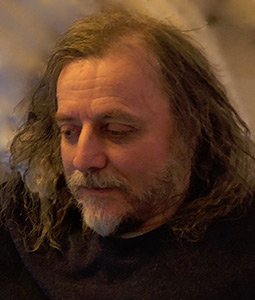
Diederik AertsDiederik Aerts

Professor Diederik Aerts graduated with an MSc in Mathematical Physics and holds a PhD in Theoretical Physics from Brussels Free University. For his doctoral research, he worked with Constantin Piron within the so-called ‘Geneva School on the Foundations of Physics’, on the ‘quantum axiomatic description of composite entities’, proving among other things the ‘impossibility of standard quantum theory to model systems of separated entities’.

For his postdoc, Professor Aerts worked at the Belgian National Fund for Scientific Research, where he was also a tenured researcher, and he then became a professor at Brussels Free University (VUB). There, he was the director of the Center Leo Apostel of Interdisciplinary Studies, before becoming emeritus a year ago. He is Editor-in-Chief of the Springer Nature journal ‘Foundations of Science’ and a board member of the Worldviews group, founded by the late philosopher Leo Apostel. He is also president of the Centre for Quantum Social and Cognitive Science (IQSCS) at Leicester University (UK) and a Fellow of the College of the International Institute for Advanced Studies in Systems Research and Cybernetics (IIAS). He was the scientific and artistic coordinator of the ‘Einstein meets Magritte’ conference, at the VUB, where some of the world’s leading scientists and artists gathered to reflect on science, nature, human action and society. This was followed up by two international symposia co-organized with his collaborators and students, ‘Times of Entanglement’ at the World-Exhibition in Shanghai and ‘Worlds of Entanglement’ at the VUB.

Professor Aerts is considered to be one of the pioneers of the research domain called ‘Quantum Cognition’, where quantum structures are used to model aspects of human cognition and decision, a domain in which he is still actively engaged with his group of collaborators and PhD students. Starting from his reflection in the field of quantum cognition, Professor Aerts also formulated a new interpretation of quantum theory, called the ‘conceptuality interpretation’, where quantum entities are considered to be concepts (meaning entities) instead of objects. With his group, he is currently elaborating this challenging approach in all its possible facets and fields of inquiry, as it appears to be able to elucidate fundamental aspects of quantum theory, such as uncertainty, indistinguishability, entanglement and superposition, which have not yet found a satisfactory explanation in existing quantum interpretations.

To find out more about Professor Aerts please view his full CV here: Diederik Aerts CV


Special Prigogine Lecture
on

A Quantum Quest. From operational quantum axiomatics to quantum conceptuality, or how to unveil meaning in reality

to be delivered by Professor Diederik Aerts
at the University of Santiago de Compostela, Spain,
on Wednesday 1st September 2021

Highlights of his research are outlined leading to the formulation of a new interpretation of quantum mechanics, called the ‘conceptuality interpretation’. In this new thought-provoking interpretation quantum entities are considered to be concepts instead of objects and fundamental quantum phenomena, such as Heisenberg uncertainty, indistinguishability, entanglement and superposition, which cannot be addressed in a satisfactory way in the existing interpretations, find a very natural explanation. The interpretation also provides interesting insights as regards the possible nature of the world in which we live and evolve.

The full lecture abstract can be found here: Special Prigogine Lecture - Diederik Aerts


For further information about the Prigogine Awards, please contact:

Prigogine Award
Wessex Institute
Ashurst Lodge, Ashurst
Southampton
SO40 7AA, UK

Tel: +44 (0) 238 029 3223

Email: wit@wessex.ac.uk


See the following Web pages for details of the recent Prigogine Awards:

Further details of all Prigogine Awards can be found on our dedicated page: Prigogine Award
Thursday, 25 February 2021

Webinar on Energy Engineering: Advances in Production and the Role of Consultancy

24th February 2021, 2pm to 4pm (GMT)

Online

>Webinar on Energy Engineering: Advances in Production and the Role of ConsultancyOverview

This webinar presents current technological developments in harnessing and processing products from renewable energy sources such as solar, biomass and waste. It also deals with challenges for consulting services in the energy sector arising from the emerging smart grid technologies and the adverse consequences of climate change.

Webinar Presentations

  • “Synthetic natural gas production: production cost, key cost factors, and optimal configuration”
    Miss Devasanthini Devaraj, University College Dublin, Ireland

  • "Setbacks in solar PV performance and proposed mitigation"
    Prof Hussain Al-Kayiem, Universiti Teknologi PETRONAS, Malaysia

  • "Energy engineering and consulting: new challenges and reality"
    Dr Mikhail Kozhevnikov, Ural Federal University, Russia

  • "Good practices" to improve energy efficiency in the industrial sector"
    Simone Maggiore, Energy Efficiency Research Group, Italy

For details of future Webinars please visit:

WIT Winter Webinars

Thursday, 28 January 2021

Webinar on Water Nexus: Dealing with Conflicting Aspects of Water Management

 27th January 2021, 2pm to 4pm (GMT)

Online

Webinar on Water Nexus: Dealing with Conflicting Aspects of Water ManagementOverview

The webinar was intended to describe both the implications of proper and sustainable water management upon the different needs a society has to face and a large number of uncertainties in this field which still require solutions. The experiences and case studies presented in the webinar were selected in order to cover a broad spectrum of problems and opportunities.

Webinar Presentations

  • “Pumped-Hydro Storage Systems and Flood Risk Mitigation: A Proposed Nexus”
    David Proverbs, Birmingham City University, UK

  • “Nature-based water treatment solutions and their successful implementation in Kathmandu valley, Nepal”
    Zuzana Boukalova, VODNÍ ZDROJE, a.s., Czech Republic

  • “Infiltration-exfiltration systems design under hydrological uncertainty”
    Gianfranco Becciu, Polytechnic University of Milan, Italy

  • “New Phase in the Process of Maintenance of the Urban Agricultural Area of “L’Horta de València”, Spain”
    Jose Luis Miralles i Garcia, Polytechnic University of Valencia, Spain

For details of future Webinars please visit:

WIT Winter Webinars

Thursday, 21 January 2021

COVID-19 Update - New Arrangements for 2021 Conferences

Santiago Hernandez, Chief Academic Officer

The year 2021 has started and the COVID-19 pandemic continues to seriously affect daily life and people’s health around the world. Although the rollout of vaccination programmes will contribute to getting the health crisis under control, the restrictions in people´s mobility will continue for the next few months at least, thereby preventing most international travel.

In these challenging circumstances, WIT has continued as usual with its activities and has also introduced new ones, for instance, the WIT Winter Webinars, a series of monthly free live-streamed events covering a variety of scientific fields held from December to April. See https://www.wessex.ac.uk/webinars for more information.

As it was the case last year, we are conscious that the scientific community continues to work and wants to disseminate and publish their research. With the objective to continue our services and preserve the well-being of our delegates, we have decided that WIT Conferences scheduled between May and July 2021 will take place online.

Having taken into consideration the valuable comments from last year’s online conference feedback forms, we are pleased to announce that our 2021 online events will have two new features:

  • Daily live-streamed Q&A session with authors.

  • Reduced registration fees including a specially reduced early-bird registration.
    • Chair/ISAC Fee €450 / €320 (early bird up to two months before the conference)
    • Standard Fee €550 / €400 (early bird up to two months before the conference)
    • Student Fee €300 / €250 (early bird up to two months before the conference)

Below is a short description of how online events will be run:

    1. Following the acceptance of a paper, authors will be asked to submit their PowerPoint Presentation with voice-over before the conference. A set of instructions to help authors prepare their presentation will be provided.

    2. With the accepted papers and presentations, WIT will elaborate an online programme divided into topic sessions as usual. The programme will be available from the first day of the conference until the conference eBook is available (approx. 8 weeks). Delegates will be able to download papers and visualise presentations in any order and as many times as they wish.

    3. Each day of the conference will include a live-streamed Q&A session where delegates will be able to pose questions to the authors of the papers scheduled in the programme for that day. Authors of the day will be asked to be present for the duration of the Q&A session.

    4. Certificates for online participation will be provided after the event.

    5. Accepted papers will continue to be published in a volume of the WIT Transactions which are Scopus indexed and accessible to the scientific community Open Access via the WIT Press website.

We look forward to meeting our delegates again very soon but in the meantime, we want to encourage the scientific community to continue with their research activities and participation in our conferences. We will continue with the commitment to our publishing activities, providing researchers with the greatest dissemination that their high-quality work deserves.

My very best regards


Santiago Hernández
Chief Academic Officer
Ashurst Lodge

Thursday, 17 December 2020

Webinar on Architecture and Urban Planning for Eco-Sustainable Cities

16th December 2020, 2pm to 4pm (GMT)

Online

Webinar on Architecture and Urban Planning for Eco-Sustainable CitiesOverview

The webinar was intended to describe the challenges and strategies that can be necessary to implement architectural design as well as city planning based on the concepts of green architecture and sustainability in the context of massive urbanization. The examples described in the webinar corresponded to different countries and applications.

The webinar consisted of four 20-minute presentations selected among the best papers presented at our 2020 conferences and also include a 30-minute Q&A section at the end to allow attendees to make questions to the presenters.

Webinar Presentations

The programme included the following presentations:

  • "Hospital design, construction and management"
    Pilar Chias, University of Alcala, Spain

  • "The future of dwelling: rocking the house-boat"
    Camilo Cerro, American University of Sharjah, UAE

  • "Temporary transformations to access and experience sustainable city public spaces"
    Danila Longo, University of Bologna, Italy

  • "Sustainable Cities indices in Modern Architecture, A Comparative study in UAE"
    I. A. Shahid Ibrahim, University of Sharjah, UAE

For details of future Webinars please visit:

WIT Winter Webinars

Monday, 9 November 2020

WIT Winter Webinars

The programme of WIT conferences in 2020 is almost complete, with the exception of the BEM/MRM 43 Conference, which is to take place in early December. For 2021, WIT has, as usual, an outstanding programme composed of 15 conferences that will start in May, most of them already announced on the Web.

We are living in uncertain times, defined by the crisis generated by the COVID-19 pandemic that has disrupted in many ways our social lives and has almost stopped people´s mobility. These circumstances are decreasing the possibilities of in-person networking and interchange of ideas.

WIT always tries to react proactively to each situation and in this case, the Institute has decided to organize a series of free live-streamed webinars, the WIT Winter Webinars, which will take place from December 2020 to April 2021, and will cover the winter months until the start of the 2021 calendar of WIT Conferences.

Each webinar will be devoted to a specific scientific field and will consist of four 20-minute presentations selected among the best papers presented at our 2020 conferences and also include a 30-minute Q&A session at the end to allow attendees to put questions to the presenters.

Registration for the webinars will be free of charge and those interested will be provided with the necessary instructions to register and access the event.

We hope this initiative will increase the dissemination of the best contributions from WIT conferences, show a clear description of the activities of the Institute and encourage senior and junior researchers to attend our future conferences.