Tuesday, 6 January 2015

Eminent Scientist Medal Awarded to Professor Syed Zubir

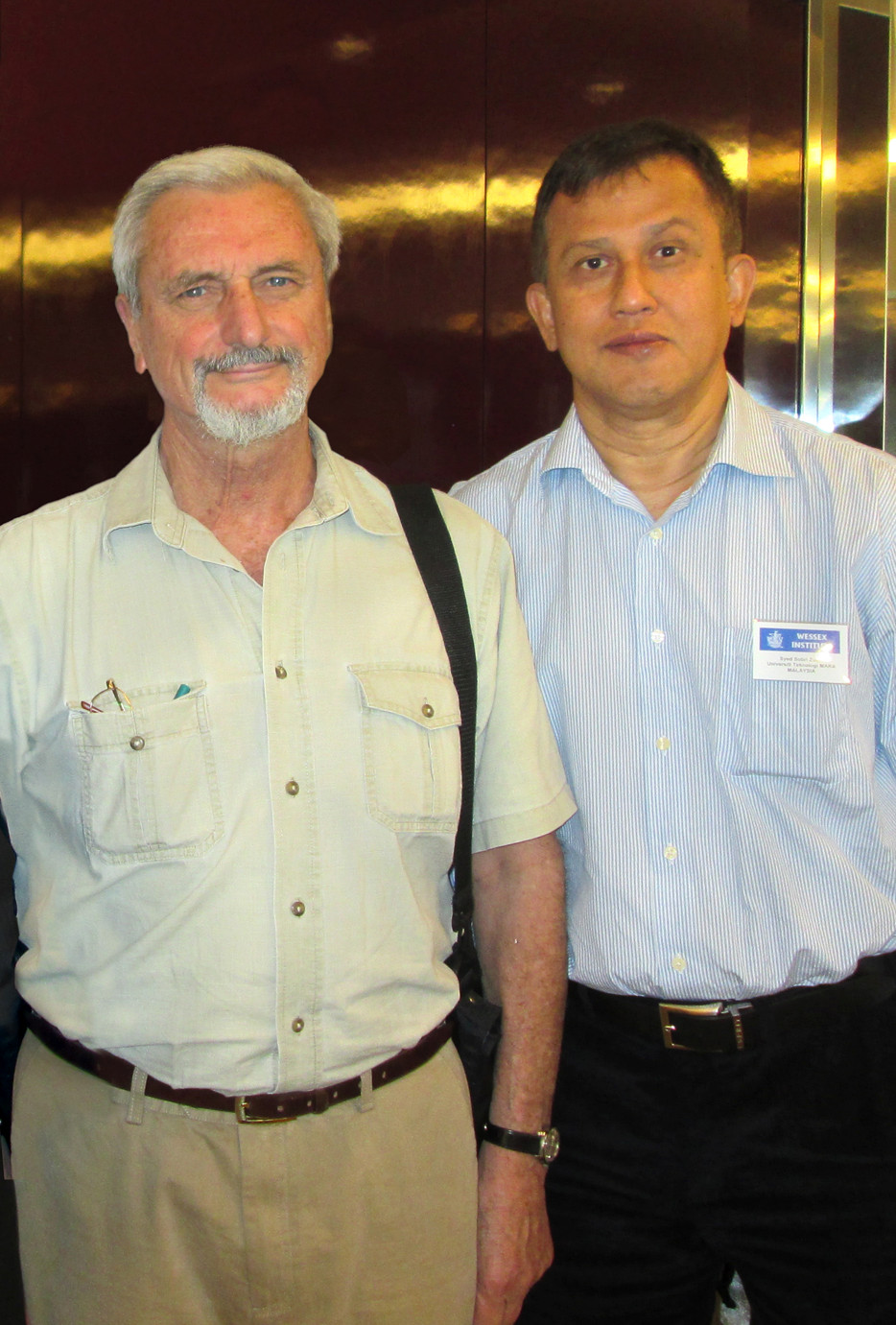
Professor Syed Zubir from the School of Architecture, Planning and Surveying of the Universiti Teknologi Mara, who has had a distinguished academic career as well as practical experience, has been awarded the Eminent Scientist Award of the Wessex Institute of Technology.
This Medal is given annually by the Board of Directors to colleagues who are not only excellent researchers and teachers, but also people of the highest integrity.
Professor Zubir received his first degree in architecture from the Universiti Teknologi Mara and continued his studies at the University of Wisconsin in Milwaukee, followed by a Master in Urban Design and Planning at the well known Pratt Institute in New York. After this, he completed a PhD at Sheffield University in the UK.
His main scientific publications deal with Urban Design and Malaysian Architecture, including the importance and value of heritage sites and vernacular elements in contemporary design. He has been equally prolific in the field of Architecture teaching and is renowned for his mentoring of young architecture students.
Professor Zubir’s work came to the attention of Wessex Institute when he participated in the Sustainable City Conference that took place in Siena in 2004. He later contributed with a paper to the 1st International Conference on Ravage of the Planet held in 2006 in Patagonia, also organised by Wessex Institute.
The Meeting, which was opened by a Nobel Prize Winner, produced an important Declaration that referred to the need to prevent further deterioration of the environment and applying the principles of sustainability in urban design and architecture. The Conference was reconvened again in Kuala Lumpur in 2011 under Syed’s chairmanship. His association with Wessex Institute led to a further meeting, also held in Malaysia, and co-chaired by him in 2013 on a topic of The Sustainable City, Urban Regeneration and Sustainability. A subsequent Conference on Energy and Sustainability in 2014 marked one of the many initiatives in which Wessex Institute has had the pleasure of collaborating with Professor Zubir.
Professor Zubir is author of many papers and publications and serves on the Editorial Boards of several prestigious Journals, including some published by WIT Press, the publishing arm of the Wessex Institute.
He is also an excellent teacher and supervisor. WIT had occasion to help him organise a visit to several European Architectural Heritage Centres in 2014. The participants were able to achieve the maximum benefit from a tour that took them to several countries, in addition to visiting WIT Campus in the New Forest.

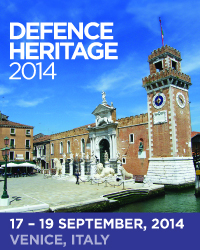
Defence Heritage 2014 Post Conference Report

Overview


The second international conference on Defence Heritage took place in Venice Arsenale, following the success of the first meeting held in Portsmouth in 2012.

The meeting was co-organised by the Wessex Institute of Technology and the Arsenale.  Its objective was to raise the knowledge of the scale, design and functions of defence sites.  It brings a better understanding of the issues raised by their redundancy and the implications of different disposal processes for the land.

As defence priorities and strategies change a large variety of defence buildings and sites are becoming redundant in different parts of the world.  The conference explores issues related to challenges offered by former defence sites focussing on innovative approaches to achieve sustainable new life in those often significantly important sites.

Understanding and respecting a defence site’s history and significance is essential to appreciate new use, but its potential may not be recognised.  Some sites, once dedicated to national security, are being transformed by artistic activity, via redistribution of whole sites, conversion of individual military buildings, and the construction of new galleries in former defence enclosures, temporary installations, festivals and arts events.  Remote sites may need new infrastructure in order to reconnect them with the civilian world, but for countries with economic pressures financing might be hard to find, as they may be overwhelmed by the sheer weight of their historic defence legacy.

The conference discussed presentations aimed to cover some of the most pressing problems facing defence heritage sites, reviewing and discussing experiences in different parts of the world.

The meeting was opened by Professor Carlos A Brebbia, who explained the importance of this conference for the Wessex Institute of Technology, the aim of which is to disseminate knowledge across the world.

Carlos described the main activities of WIT, including the industrial research and development work.  The Institute carries out advanced consultancy and software development for large energy and aerospace companies from all over the world.

WIT Press, the publishing arm of the Institute, continues to produce a large number of books, in addition to important interdisciplinary journals.  Their work is now reaching a wider audience as digital publishing becomes more prevalent.  This contributes to make the work of Wessex Institute and its activities even more significant.  The papers presented at this conference, for instance, are now permanently archived in the eLibrary of the Institute (http://www.witpress.com/elibrary) as Volume 143 of WIT Transactions on the Built Environment.

Carlos concluded by wishing the participants a successful meeting, hoping that they would be able to strengthen their links.  Networking is one of the most important aspects of WIT conferences, which are characterised by their friendliness, and exchange of experience and knowledge amongst the participants.

Grazia Storelli from the Comune of Venice welcomed the delegates to the Arsenale.  She is an Architect involved with the maintenance and renovation of the complex.

The City is keen to involve the Arsenale more in the city itself, which will open a new area to visitors and locals as well, by integrating it with the Venice community.  A development plan is now being completed for Venice, incorporating the Arsenale.

The Nuova Torre, where the conference took place, was very derelict before restoration.  It was originally built to store the ship masts, which were put on the ships when they left the basin.  It was basically a large open space, but lost its roof and internal timber structures.

Following this, Celia Clark welcomed the delegates, explaining the parallels with the Arsenale’s problems and its integration in the community which are similar to the situation in her own town of Portsmouth.  Because of this, is it important when studying different shipyards around the world to share experiences.

 Invited Presentations

There were a series of invited presentations to enhance the conference proceedings, ie

  • ‘The ecological footprint and the evolution of some Roman sites on the Danube River’, by Dan Constantinescu, Polytechnic University of Bucharest, Romania.
  • ‘Assessment of the masonry strength of the fortress in Terezin’, by Milan Holicky, Czech Technical University, Czech Republic.
  • ‘The history and legacy of the United States Naval Communication Station in Thurso, Scotland’, by James Gunn, Dounreay Site Restoration Ltd, United Kingdom.
  • ‘The Master Plan of Fortifications as a management tool for the conservation and development of the defence heritage of Cádiz’, by Carlos Rubio-Bellido.
  • ‘Conservation of defence heritage structures using corrosion protection techniques’, Rene Brueckner, Mott MacDonald, United Kingdom.
  • ‘Make art not war: defence sites find new life as centres of creativity@, by Celia Clark, Wessex Institute of Technology, United Kingdom.
  • ‘Accessibility to the historic defence sites of Oman for people with mobility impairment: the cases of the Nakhal, Al Hazm and Khasab fortifications’, by Mohammed Al-Belushi, Sultan Qaboos University, Oman.
  • ‘The Pula Forts: opportunities and risks’, John Harris, Fortress Study Group, United Kingdom.


 Social Occasions

The participants had numerous occasions for interaction, not only during the formal sessions but in coffee and lunch breaks, which were also enjoyed in the Nuova Torre.  The tower, which has been very significantly restored, has a terrace at the top from where the whole of Venice and the neighbouring Italian mainland can be seen.  It was a popular place for the delegates to meet during the breaks.

The conference dinner took place in a restaurant renowned for preparing typical Venetian dishes.  The recipes were based on research carried out on the history of Venetian cuisine and wines.  They consisted of risotto and pasta with seafood and as a main course a selection of duck, fish or eel, all of these very much local dishes.  The wines were from the Veneto region, specially selected to accompany the dishes.  The delegates ended by having coffee on the Piazza San Marco, accompanied as well, to the sound of music.  The good food, drinks and the excellent weather helped to make this a memorable occasion.

 Closing of the Conference

The conference was closed by Carlos who referred to the importance of the meeting and the excellent level of interaction amongst the delegates.  The success of the meeting will lead to it being reconvened in 2016, at a time and location to be shortly announced.


 Conference Proceedings

 The proceedings of Defence Heritage 2014 – Defence Sites II, 432pp (Print ISBN: 978-1-84564-833-6; eISBN: 978-1-84564-834-3) are available from WIT Press. Orders can be placed on the WIT Press web site at www.witpress.com or by email: marketing@witpress.com, telephone: +44 (0) 238 029 3223 or fax: +44 (0) 238 029 2853.

Papers from the conference will also be hosted online at the WIT eLibrary as Volume 143 of WIT Transactions on Built Environment (ISSN: 1746-4498, Digital ISSN 1743-3509). For more details visit the WIT eLibrary at http://www.witpress.com/elibrary


 Related Conferences

Thursday, 1 January 2015

BEM/MRM 37 Post Conference Report

Overview


The 37th International Conference on Boundary Elements and Other Mesh Reduction Methods took place in the New Forest near Southampton, where the method was developed and the first meeting was held in 1978.

The continuous development of the method and the increasing vitality of the research carried out throughout the world are due to its ability to evolve.  This has been more marked with the development of Mesh Reduction Techniques, an area of research which continues to produce excellent results, as evidenced by papers presented at the conference.

The conference was opened by Professor Carlos A Brebbia, Director of Wessex Institute of Technology and Professor Alex Cheng from the University of Mississippi.

Carlos referred to the importance of finding ways of arriving at solutions that require neither initial mesh, even in the case of non-linear or time-dependent problems, nor surface meshes in general.  This objective is becoming more feasible as the research progresses.

Equally important – Carlos said – is the development of powerful and robust boundary element software tools in order to open new areas of industrial applications. In this regard, engineering practitioners will demand software that can cope with a large number of degrees of freedom.  This will lead to the method being fully accepted in engineering practice.

We have seen, in Carlos’ opinion, the emergence of robust codes which are used to solve real engineering problems, with particular emphasis on those for which classical finite elements give poor results.  The experience in fracture mechanics, crack propagation and other extreme cases has reinforced the perception of boundary elements as a highly accurate technique.  Problems extending to infinity is another area in which boundary elements offer elegant and easy to use solutions.

Cases such as these are the basis on which BEM ought to gain acceptance by industry.  The time – Carlos asserted - is ripe for BEM.

 George Green Medal

Following these remarks the George Green medal was introduced by Alex Cheng.

This is a new initiative by the University of Mississippi, in association with the Wessex Institute of Technology.

The importance of Green’s work was described by Alex, particularly his development of his functions which set the basis for boundary elements.  Very little is known about George Green, there is not even a picture of him.  Green was totally self-taught and published a few copies of his most famous works on a subscription only basis.

It is impossible to understand how George Green was able to acquire his knowledge in a backwater place of England, as Nottingham was at that time.  He only had access to a local library and distributed his work around sponsors who were unable to fully appreciate the importance of his work.

One of these sponsors pointed out the work to a Cambridge don and this led to a minor appointment at that University, which he had to leave due to illness.  Shortly after that he died, his research was forgotten and it was only due to Lord Kelvin that much later on Green’s work was rediscovered.  The Green Medal was established to honour him and as a reward to outstanding research carried out in BEM.

The Green Medal Award Committee decided to give the Medal to Professor Carlos A Brebbia, as originator of the technique.  He not only proposed the interpretation of the method in variational terms and weighted residuals, but developed its finite element type methodology.  Carlos also organised the first boundary element conference in 1978 and promoted the application of the method for the solution of practical engineering problems.

The medal was then awarded by Prof Alex Cheng to Prof Carlos A Brebbia, with the congratulations of the Selection Committee.  Prof Antonio Tadeu of Coimbra University presented Carlos with a diploma.

Carlos thanked them for their kindness and accepted the medal in his own name, as well as the many colleagues who were part of his Southampton group.

He then briefly recalled the beginnings of the boundary element, showing the importance of different scientists and groups in its development.  This included the Research School created at Southampton University by the late Prof Hugh Tottenham; the MIT School of Eric Reiner, widely known through the work of Jerry Connor and the discussions with Prof Maurice Jaswon of City University, who was working on indirect boundary integral equations.

The different centres converged towards the Southampton group where the technique originated.  The same group also created a series of other research centres around the world, including Japan, Brazil, Spain, Slovenia and others.  In particular, it collaborated with the groups in the USA working on the method.

The research work carried out in the 1980’s and 1990’s was most productive and resulted in many, now well established, developments.  One of the main objectives of the Southampton group, by then based at the Wessex Institute of Technology, was to create a tool to solve practical engineering problems and methodologies to avoid internal meshes.

As a result, the BEASY code was developed, which is now popular for a range of problems, including problems extending to infinity or those requiring accurate results.  This work still continues and has resulted in a very successful performance for BEASY.

A major contribution was the development of techniques such as Dual Reciprocity Method, and one of the main researchers in this field was Prof Paul Partridge in Brazil, who has just passed away.  Carlos wanted to take this opportunity to pay tribute to his memory.

Paul was one of the first PhD students in the Southampton Group under Carlos’ supervision.  After graduation he found a Post-doctoral position at the Federal University of Rio Grande do Sul in Brazil, a country that he dearly loved.  From this Post-doctoral appointment he moved to the University of Brasilia where he became a permanent member of staff, leading to his appointment as a Full Professor.  Two years ago he retired from academia and recently passed away after a short illness.  Paul will be always remembered for his friendliness, modesty and generosity as well as his many academic accomplishments.

The Conference was declared open after this short tribute.

 Conference Topics

The papers presented at the meeting are published in Vol 57 of WIT Transactions on Modelling and Simulation, and permanently stored in the WIT Press eLibrary (http://library.witpress.com/).  They are grouped in the following topics:

  • Advanced formulations
  • Advanced meshless and mesh reduction methods
  • Electrical engineering and electromagnetics
  • Heat and mass transfer
  • Solid mechanics
  • Dynamics and vibrations
  • Fluid flow modelling


 Invited Presentations

There were a substantial number of invited presentations given by well know colleagues:

  • “Collocation and optimization initialization”, by Edward Kansa, Convergent Solutions, USA.
  • “The study of porous elastic plates by mesh-free methods”, by Vladimir Sladek, Slovak Academy of Sciences, Slovakia.
  • “A Kansa-RBF method for Poisson problems in annular domains”, by Andrea Karageorghis, University of Cyprus, Cyprus.
  • “A BEM and FEM analysis of fluid-structure interaction in a double tank”, by Elena Strelnikova, Ukrainian Academy of Sciences, Ukraine.
  • “The hypersingular boundary element method revisited”, by Ney A Dumont, Pontificia Catholic University of Rio, Brazil.
  • “Surface integral equation analysis of the electromagnetic interference”, by Dragan Poljak, University of Split, Croatia.
  • “On modification of the method of mechanical quadrature for SIE in crack problems under step-like loads”, by Alexander Galybin, The Schmidt Institute of Physics of the Earth, Russia.
  • “An efficient MFS model for the analysis of sonic crystals including fluid-solid interaction”, by Luis Godinho, University of Coimbra, Portugal.
  • “Wavelet compression of parabolic diffusion integral kernels”, by Jure Ravnik, University of Maribor, Slovenia.
  • “The interface integral BEM for solving general non-homogeneous and non-linear mechanics problems”, by Xiao-Wei Gao, Dalian University of Technology, China.


 Lunch Excursion

During the conference there were ample opportunities for the delegates to get to know each other better and for having informal discussions.

The lunch time excursion during the first day was to the village of Minstead, in the New Forest.

Minstead is one of the most charming villages in the Forest and has been described as a typical New Forest Green.  Across the Green is a pub with the unusual sign “The Trusty Servant”, which is the same as that displayed in Winchester College, presumably from the days when the pupils had personal servants.  The delegates were offered lunch at the pub before proceeding to walk around the village and see the Church.

The Church is located at a short walk from the green at the top of a little hill.  The church is a jumble of different styles, including Saxon and Norman. Its most remarkable feature is having a three-tiered pulpit and a series of different seating boxes for the important local families.

In the churchyard one can see the resting place of Sir Arthur Conan Doyle, the creator of Sherlock Holmes, and his wife, who although from another part of England, lived in a cottage in the New Forest.

Another interesting character buried there is Christopher Tower, a diplomat and poet who became an expert in Arab affairs and Chief Advisor to the King of Libya.  As a poet he was not very successful, nevertheless he established a Poetry Fellowship in his old Oxford College.

North of Minstead lays the Rufus Stone, marking the site where William II, called Rufus for the colour of his hair, was slain by a stray arrow.

The weather was kind during the visit and the delegates had ample time to walk around the village and enjoy the sites.

 EABE Meeting

The annual Editorial Board meeting of the Journal of Engineering Analysis with Boundary Elements took place during the conference with a substantial number of members in attendance.  The discussions took place over an excellent dinner.

Alex Cheng, as Editor in Chief, gave a brief introduction and reported on how the Journal was progressing.  There has been an increase in the number of papers published in 2013 over previous years, and the tendency is to continue to grow.  The Board is aware of the need to retain the quality of the papers, as well as its size and different ways of ensuring this were discussed.  Alex also referred to the excellent special issues now in progress and to the appointment of new Board members.

The issue of how to retain the vitality of the publications was discussed in detail.  The general consensus was that it is essential to appoint a few young scientists and this led to Alex asking for nominations being put forward.

The Journal needs to be promoted better in some countries where substantial Boundary Element research groups exist, but which are under represented by numbers of papers.

The impact factor of the Journal continues to be high, but a special effort is required to raise it in relation to those of the main competing publications.

The evening ended in a very friendly atmosphere and Alex received a number of suggestions of how to improve the EABE journal even more.

 Conference Dinner

The Conference dinner took place in the unique setting of Rhinefield House, a New Forest mansion now converted into a luxury hotel.  The house, built in the 1890s resembles a Scottish castle with a variety of styles for its numerous rooms.  The dinner itself took place in the King’s Room, a French-like dining area, while other rooms are of Spanish, Italian and even Arabic style.

The manor was a wedding present to Mrs Munro-Walker, a rich heiress of a Nottingham fortune, based on coal mines.  Mrs Munro married a Navy officer, who was absent for long periods, during one of which she built a round smoking room in the Mudejar style as an anniversary present.  The task was carried out by workers specially shipped from abroad who were the only ones able to work the intricate plaster decorations.

The main hall of the house has an impressive hammer beam type of roof structure, similar to the one in the ancient Hall of Westminster in the Houses of Parliament.  This room is the central part of the house.

The dinner consisted of excellent dishes, washed down by well-chosen wines, which helped to produce the right atmosphere for creating further links amongst the participants.

The delegates were also shown around the garden by Carlos who explained their history and the considerable efforts made in the last forty years to restore them to their former glory.

 Closing of the Conference

The Conference was characterised by its friendly atmosphere and the quality of the discussions that took place outside as well as during the sessions.

Carlos closed the meeting, commenting on the vitality of BEM research as evidenced by the number of young researchers and PhD students who continue to participate in BEM/MRM conferences.  He thanked the delegates for their commitment to developing the method into a powerful software tool.

The next conference will also take place in the New Forest, home of the Wessex Institute, from 21-23 September 2015.  For more information contact: rloock@wessex.ac.uk.

 Related Conferences:
Tuesday, 30 December 2014

Design and Nature 2014 Post Conference Report

Overview


The 7th International Conference on Comparing Design in Nature with Science and Engineering (Design and Nature 2014) has been held in Opatija, Croatia, organised by the Wessex Institute of Technology and sponsored by the International Journal of Design & Nature and Ecodynamics.

The conference started in Udine (2002) and since then has been reconvened in a series of locations around Europe, ie Rhodes (2004); The New Forest, home of the Wessex Institute (2006); the Algarve (2008); Pisa (2010) and A Coruña (2012).

Understanding nature has been a driving force for the research of many scientists and engineers since antiquity. They now have at their disposal a vast array of information for materials, mechanisms and control. They have arrived at sets of laws, products of analytical methods and observations which span from the atom level, leading to the understanding of the whole universe.

Leading thinkers have been inspired by the parallels between nature and human design. Nowadays, the huge increase in biological knowledge and developments in design and systems, together with the virtual revolution in computer power and simulation modelling, have made possible more comprehensive studies of nature.

The conference was opened by the Chairman, Prof Carlos A Brebbia, Director of Wessex Institute, who referred to the work of WIT and, in particular, it acting as a medium for the dissemination of knowledge. The conference series – Carlos said – is particularly appropriate for this as it brings people together from different locations around the world. Most of them are interdisciplinary meetings in which colleagues learn from each other in a friendly atmosphere.

The field of Design and Nature requires the collaboration of a wide range of scientists in order to better understand nature and learn from it.

Carlos also mentioned that the Institute covers a wide range of activities, in addition to research and training. Of particular importance are industrial research and publication of advanced books and journals.

It seems appropriate – Carlos said – in the case of this conference to refer to the Prigogine Medal which the Institute awards annually to renowned colleagues influenced by the work of Prigogine. This medal – established by the University of Siena and the Wessex Institute – started in 2004 to honour Prigogine’s memory and his association with the University of Siena’s Ecodynamics group and the fact that Prigogine was an Honorary Chairman of a WIT conference, as well as Honorary Editor of the Design and Nature Journal.

Carlos ended his remarks by thanking the delegates for coming and wishing them a very successful conference.

 Keynote Address

The keynote address was given by Prof Giora Rosenhouse, until recently professor at the Technion Institute of Technology, and now director of his own company, Swantech, dedicated to sound wave analysis and technologies. The title of this presentation was “Colors of noise fractals and applications”, in which he described a wide variety of topics, ranging from deterministic to chaos analysis and the secrets of life!

 Conference Topics

The rest of the papers were classified under the following topics:
  • Mechanics in nature
  • Natural materials and processes
  • Biometrics and bio-inspiration
  • Biological studies
  • Natural energy behaviour
  • Evolutionary physics


 Social Occasions

The delegates had ample opportunities to hold informal discussions and get to know each other better. There were complimentary lunches arranged, in addition to the coffee breaks.

An excursion was offered to visit the ancient city of Pula, the origins of which are pre-Roman. There have been human settlements there for at least the last five millennia, but the city architecture and culture has been influenced by the Romans and later the Venetians.

The most outstanding Roman remain in Pula is a large amphitheatre which could hold up to ten thousand spectators and is in reasonably good condition.

Several Roman temples are still standing in the main square as well as a beautiful Venetian building, housing the City government. Pula was an important trading port for the Romans and many reminders of that past are still dotted around the town.

The delegates had lunch in Pula, which was followed by a guided tour of the main places in town, ending in the amphitheatre museum.

The conference banquet was another occasion for the delegates to build stronger links. It consisted of a boat trip followed by a sit down dinner in beautiful surroundings.

The boat trip took the delegates around Opatija bay so that they could appreciate the hills, summer houses and hotels that cover the slopes and the shore. Then they had a glass of Spumante and some canapés.

Upon disembarkation the delegates were taken to a restored residence known for its paintings, prints and other works of art, and from there proceeded to the restaurant where the dinner was to take place. This was an old house, beautifully restored, facing the bay.

The dinner took place in a room whose walls were covered in paintings. There they had an outstanding meal consisting of Croatian specialities and accompanied by local wines and music of the region. The dishes included pasta, beef and home made ice cream.

The evening was most enjoyable and helped to consolidate the links between the participants.

 Closing of the Conference

The conference was characterised by its friendliness and the high level of discussions. This is particularly important for a topic like Design and Nature that spans many different disciplines.

The meeting was closed by Carlos, who expressed his appreciation to the members of the International Scientific Advisory Committee for their work in reviewing papers and to all attendees for their contribution. He referred to the possibility of publishing in the International Journal of Design and Nature, a unique forum for this type of research.

 Related Conferences

Thursday, 25 December 2014

Sustainable Tourism 2014 Post Conference Report

 Introduction


The sixth International Conference on Sustainable Tourism took place in Opatija, Croatia organised by the Wessex Institute of Technology and the Complutense University of Madrid. The Chairmen were Prof Carlos A Brebbia, Director of Wessex Institute, Dr Srecko Favro from the Hydrographic Institute of the Republic of Croatia and Prof Francisco Pineda, from the Complutense University of Madrid.

The meeting was reconvened in 2014 following the success of the five previous conferences starting in Segovia in 2004, followed by Bologna (2006); Malta (2008); The New Forest, home of the Wessex Institute (2010) and A Coruña (2012).

The Sustainable Tourism conference is well established after ten successful years and it attracts papers on a wide variety of topics. The material presented in the book, as well as those from previous conferences, is of interest to the wide community as well as to the tourist industry which can find in the conference volumes, a point of reference for strategic planning and programme development. All the papers published since the first meeting in 2004 are part of the WIT Transactions on Ecology and the Environment and archived in the Wessex Institute eLibrary (http://library.witpress.com/) where they are permanently and easily available to the international community. There the wide variety of topics discussed during the meetings can be appreciated. The papers also demonstrate the importance of the conference series in providing invaluable material to study this ever expanding field of human activity.

Tourism, research and development encompass many different fields of knowledge. The Sustainable Tourism conferences offer a forum to discuss the diverse components of tourism phenomena, ranging from biophysics, to socio-economic and cultural aspects, as well as field studies and academic research, stressing as well the entrepreneurial and institutional side of the industry.

During the last decade, the meeting has enhanced and reflected the changes in the field. The conference now has to address, among other aspects, the need to develop dynamic models that can analyse existing data to predict future trends. In this manner, pathways can be established for different sections of the market including different types of tourism, ranging from the classical “4S” to historical, cultural and ecological tourism.

 Opening of the Conference

The conference was opened by Prof Carlos A Brebbia who referred to the importance of the conference series to fulfil the objectives of the Institute, ie the transfer of knowledge at an international level. The Institute – Carlos said – carries out this function through a series of activities, including conferences. Other activities are industrial research for engineering industries, such as energy and aerospace, amongst others. This work is based on research carried out at the Institute on advanced software tools, particularly in the area of numerical methods for which WIT has acquired an international reputation.

Another important activity of the Wessex Institute is the publishing and dissemination of books and journals, in digital as well as paper format. Conferences such as Sustainable Tourism are part of the important WIT Transactions series.

Carlos also referred to the training and research activities taking place at the Institute campus in the New Forest. There the Institute has residential facilities for students and visitors, and can provide an environment ideal for research.

Carlos ended his address hoping that some of the delegates will consider visiting the WIT campus in the near future so that they can better appreciate the work of the Institute.

 Welcome and Keynote Addresses

Srecko Favro welcomed the delegates to Croatia and explained the motivation to support the conference. He mentioned that he has collaborated with WIT in organising two important meetings on Island Sustainability, a topic of great interest for his country. Many islands in Croatia have lost their population in recent years, a trend that the government is now trying to reverse.

Srecko referred to the potentialities of Croatia, including its rich history and culture. Of particular importance is nautical tourism, a form of tourism that respects rather than damages the environment. There is a large potential for marinas in the Dalmatian Coast.

Croatia is particularly aware of the need to respect and protect its unique environment and expects this investment in nautical tourism to grow rapidly.

The important point – Srecko stated – is to take full advantage of Croatia’s beautiful natural environment. The benefits from this should go to the local community. Srecko’s argument was that nautical tourism can be seen as eco-friendly and helps to create a suitable environment for repopulating many of the now deserted islands.

The keynote address of the conference was given by Prof Ulrike Pröbstl-Haider from the University of Natural Resources and Life Sciences in Vienna on the topic “Green meetings: ecocertification of sustainable events in conference and business tourism”, a paper which was well received and led to a lively discussion.

 Invited Presentations

Other invited lectures were:
  • “Accessing the attitudes of successors in dairy farms towards educational tourism” by Yasuo Ohe, Professor of Rural Economics at Chiba University, Japan.
  • “The evaluation of the present anchorage condition and the development tendency in Zadar County” by Srecko Favro, Ship Survey Consultant and Hydrographical Institute of Croatia.
  • “Environmental valuation by the local population and visitors for zoning a protected area” by Francisco Pineda, Complutense University of Madrid


 Social Occasions

The conference offered numerous occasions for the participants to interact with each other through a series of social functions, including lunches and coffee breaks.

The International Scientific Advisory Committee (ISAC) of the Conference met over dinner to discuss ways in which the Call for Papers could be improved when the meeting is reconvened in 2016. A series of new topics were proposed that reflect new research carried out in tourism and the demands of the industry. New names were proposed for the ISAC and a series of possible locations discussed. The WIT Conference Division will investigate the facilities offered by each site to decide where to hold the next meeting.

An excursion was offered to visit the ancient city of Pula, the origins of which are pre-Roman. There have been human settlements there for at least the last five millennia, but the city architecture and culture has been influenced by the Romans and later the Venetians.

The most outstanding Roman remains in Pula is its large amphitheatre which could hold up to ten thousand spectators and is in reasonably good condition.

Several Roman temples are still standing in the main square as well as a beautiful Venetian building, housing the City government. Pula was an important trading port for the Romans and many reminders of the port are still dotted around town.

The delegates had lunch in Pula, which was followed by a guided tour of the main places in town, ending in the amphitheatre museum.

The conference banquet was another occasion for the delegates to build stronger links. It consisted of a boat trip followed by a sit down dinner in beautiful surroundings.

The boat trip took the delegates around Opatija bay so that they could appreciate the hills, summer houses and hotels that cover the slopes and the shore. Then they had a glass of Spumante and some canapés.

Upon disembarkation the delegates were taken to a restored residence known for its paintings, prints and other works of art, and from there proceeded to the restaurant where the dinner was to take place. This was an old house, beautifully restored, facing the bay. The dinner took place in a room whose walls were covered in paintings. There they had an outstanding meal consisting of Croatian specialities and accompanied by local wines and music of the region. The dishes included pasta, beef and home made ice cream.

The evening was most enjoyable and helped to consolidate the links between the participants.

 Closing of the Conference

The meeting was closed by Carlos who thanked all delegates for their support of the WIT conference programme. The meeting was highly successful in terms of interaction amongst the delegates and quality of the presentations. The location of Opatija was particularly appreciated as Croatia is very conscious of the importance of protecting its unique environment and developing a tourism industry in harmony with nature.


 Conference Proceedings

The proceedings of Sustainable Tourism 2014 – Sustainable Tourism VI, 372pp (Print ISBN: 978-1-84564-800-8; eISBN: 978-1-84564-801-5) are available from WIT Press. Orders can be placed on the WIT Press web site at www.witpress.com or by email: marketing@witpress.com, telephone: +44 (0) 238 029 3223 or fax: +44 (0) 238 029 2853.

Papers from the conference will also be hosted online at the WIT eLibrary as Volume 187 of WIT Transactions on the Ecology and the Environment (ISSN: 1746-448X, Digital ISSN 1743-3541). For more details visit the WIT eLibrary at http://library.witpress.com


 Related Conferences

Tuesday, 23 December 2014

Air Pollution 2014 Post Conference Report

Overview


The 22nd International Conference on Modelling, Monitoring and Management of Air Pollution (AIR POLLUTION 2014) was held in Opatija, Croatia, organised by the University of the West of England and the Wessex Institute.

This successful meeting builds upon the prestigious outcomes of the 21 preceding conferences beginning in Monterrey, Mexico in 1993 and the most recent ones taking place in A Coruña, Spain in 2012 and Siena, Italy 2013.

The meetings have attracted outstanding contributions from leading researchers from around the world. The reviewed papers selected for presentation and included in the conference book have been permanently stored in the WIT eLibrary as WIT Transactions on Ecology and the Environment, volume 183 (http://library.witpress.com/). These collected papers provide an important record of the developments of science and policy pertaining to air pollution.

The Modelling, Monitoring and Management of Air Pollution conferences have attracted a global audience of academics and air pollution practitioners who, through their papers and presentations, have contributed to the evolving understanding of the science and policy contexts of air pollution.

The conference continues to meet the demands of a unique audience through the quality of the science and policy presented at the meetings and the publication format. The series has discussed important air pollution issues at an international, national and local level, and by virtue of the international composition of the delegates, has brought to the discussion a unique suite of perspectives. The conference findings and conclusions enjoy a wide and rapid dissemination amongst the air pollution science and policy communities.

The Conference series has demonstrated that the management of air pollution is one of the most challenging problems facing the international community. Discussions in the series have explored the wide spread nature of the Air Pollution phenomenon and the impacts on human health and the environment. The conference addresses a wide range of air pollution issues and challenges, but a particular strength of the series has been the attention given to regulatory and, more recently, market solutions to air pollution management.

 Opening of the Conference

Prof Carlos A Brebbia, Director of the Wessex Institute and Co-Chairman of the conference, opened the meeting. He explained WIT’s aim of acting as a medium for knowledge transfer which is achieved in different ways, ie through courses, conferences and other training activities, as well as research. The Institute has been particularly successful in developing a set of computer programmes which are now widely applied in engineering analysis and design. The main area of application at present is with petroleum and aerospace industries, where the code – called BEASY- is well established.

WIT Press, the publishing arm of the Institute provides a substantial number of books and journals every year, including the International Journal of Sustainable Development and Planning; presenters at the conference were encouraged to submit a post conference paper to the Journal.

Carlos described the wide network of WIT researchers and specialists throughout the world, in addition to its own staff in the New Forest National Park. The campus is located in the south of England in an area of outstanding beauty which Carlos invited the delegates to visit when in the region. WIT – Carlos explained – is always happy to show visitors the facilities on the campus so that they can have a better idea of how the Institute fulfils its objectives.

The Conference sessions opened with a paper by Prof James Longhurst and Dr Jo Barnes, both of The University of the West of England. The talk was given by Dr Barnes and entitled “Study of ozone concentrations and trends across Europe 1996 to 2010”. The work which was supported by the EU demonstrated that the trends are not consistent across Europe where the problem of Air Pollution is particularly complex. It may be necessary to adapt the policies to the realities of different countries rather than aim for a common policy.

 Invited Presentations

Other invited presentations were as follows:
  • “Diurnal variation and vertical distribution of carbonaceous aerosols in the southern part of Thailand” by Siwatt Pongpiachan, National Institute of Development Administration, Thailand.
  • “Air quality, climate change and resilience in the Porto urban area” by Carlos Borrego, University of Aveiro, Portugal.
  • “Has implementation of Local Air Quality Management reduced local nitrogen dioxide concentrations in the UK?” by Jo Barnes, The University of the West of England, UK.
  • “Seasonal trends of indoor particulate matter concentrations in a naturally ventilated school building” by S M Shiva Nagendra, Indian Institute of Technology, Madras, India.


 Conference Topics

The papers were divided into a series of topics, as follows:
  • Air pollution modelling
  • Monitoring and measuring
  • Aerosols and particles
  • Exposure and health effects
  • Emission studies
  • Air quality and management
  • Indoor air pollution
  • Case studies


 ISAC Dinner

The International Scientific Advisory Committee (ISAC) met over dinner to discuss the forthcoming Air Pollution 2015 due to take place in Valencia, and how to improve the meeting in 2016. The meeting continues to attract young researchers as well as better established colleagues. This is a good sign that indicates the conference scope for continuous evolution. Several new names were nominated for the committee and several possible locations were discussed. The choice of Opatija was found to be excellent for a scientific conference, while the 2016 meetings ought to be held in a location well served by one or more international airports and in a country with agile visa requirements.


 Conference Dinner

The conference banquet was another occasion for the delegates to build stronger links. It consisted of a boat trip followed by a sit down dinner in beautiful surroundings.

The boat trip took the delegates around Opatija bay so that they could appreciate the hills, summer houses and hotels that cover the slopes and the shore. Then they had a glass of Spumante and some canapés.

Upon disembarkation the delegates were taken to a restored residence known for its paintings, prints and other works of art, and from there proceeded to the restaurant where the dinner was to take place. This was an old house, beautifully restored, facing the bay. The dinner took place in a room whose walls were covered in paintings. There they had an outstanding meal consisting of Croatian specialities and accompanied by local wines and music of the region. The dishes included pasta, beef and home-made ice cream.

The evening was most enjoyable and helped to consolidate the links between the participants.

 Closing of the Conference

The conference was closed by Carlos who again thanked the delegates for their participation and the presenters for the quality of their papers. He also expressed his appreciation to the members of the International Scientific Advisory Committee whose review work was essential to ensure the quality of the conference.


 Conference Proceedings

The proceedings of Air Pollution 2014 – Air Pollution XXII, 420pp (Print ISBN: 978-1-84564-782-7; eISBN: 978-1-84564-783-4) are available from WIT Press. Orders can be placed on the WIT Press web site at www.witpress.com or by email: marketing@witpress.com, telephone: +44 (0) 238 029 3223 or fax: +44 (0) 238 029 2853.

Papers from the conference will also be hosted online at the WIT eLibrary as Volume 183 of WIT Transactions on the Ecology and the Environment (ISSN: 1746-448X, Digital ISSN 1743-3541). For more details visit the WIT eLibrary at http://library.witpress.com


 Related Conferences

Thursday, 18 December 2014

Heat Transfer 2014 Post Conference Report

Overview

The 13th International Conference on Simulation and Experiments in Heat and Mass Transfer (Heat Transfer 2014) took place in A Coruña, Spain organised by Lund University of Technology, Sweden and Wessex Institute, UK, with the collaboration of the University of A Coruña.

The Conference Chairmen were Prof Bengt Sunden, from Lund University and Prof Carlos A Brebbia, Director of the Wessex Institute.

The Conference started in Portsmouth, UK in 1988, followed by Milan (1992); Southampton (1994); Udine (1996); Krakow (1998); Madrid (2000); Halkidiki (2002); Lisbon (2004); New Forest, UK, home of the Wessex Institute (2006); Maribor (2008); Tallinn (2010) and Split (2012).

The objective of the series is to provide a forum for presentation and discussion of advanced topics, new approaches and applications of innovative computational methods and experimental measurements in heat and mass transfer.

Heat transfer topics and related phenomena are commonly of a complex nature and different mechanisms like heat conduction, convection, turbulence, thermal radiation and phase change as well as chemical reactions may occur simultaneously. Typical applications are found in heat exchanges, gas turbine cooling, turbulent combustion and fires, fuel cells, batteries, micro- and mini- channels, electronic cooling, melting and solidification, chemical processing and aerospace engineering.

Heat transfer may be regarded as an established and mature scientific discipline, but it plays a major role in new emerging ideas such as sustainable development and reduction of greenhouse gases as well as for micro- and nano-scale structures, nano fluids and bio-engineering. Non-linear phenomena may occur due to temperature dependent thermophysical properties.

To analyse the thermal process and enable design and optimisation, advances in computational methods continue to be important as engineering design and development require reliable and accurate computational tools to replace or complement expensive and time consuming experimental trial and error work. Tremendous advancements have been achieved during recent years due to improved numerical solution algorithms for non-linear differential equations, turbulence modelling and the development of computers and computing programmes to achieve efficient and rapid simulations. Nevertheless, further progress in computational methods will require developments in theoretical and predictive procedures in applied research. Accurate experimental investigations with advanced instrumentation are needed to validate the numerical calculations.

Many excellent research topics were discussed at the Heat Transfer 2014 conference, during which new applications were presented related to the use of advanced computational methods and experimental measurements in heat and mass transfer.

The Conference books containing papers presented at the meeting is Volume 83 of the series WIT Transactions on Engineering Sciences, which is widely distributed around the world in digital as well as hard copy formats. The papers are also permanently archived in the Institute eLibrary (http://library.witpress.com/), where they are easily accessible to the international community.

 Opening of the Conference

The Conference was opened by Prof Carlos A Brebbia who explained the work of the Wessex Institute, in particular its objective to act as a mechanism for knowledge transfer. WIT – Carlos said – carries out this by a series of activities, including industrial research, publication and training.

In the field of industrial applications the Institute is renowned throughout the world because of its pioneering research on boundary elements. The method is used for the analysis of problems affecting electric conduction and offshore structures and other situations used in petroleum engineering. This allows for the design of effective cathodic protection systems against corrosion. The efficient analysis of these systems, Carlos explained, has been possible because of the development of BEM tools.

Fracture mechanics and in particular crack propagation is another problem in which the Institute has carried out original research using BEM. The development of meshes that can follow the growth of cracks allowed for the prediction of the residual life of components with initial cracks. This has important applications in aerospace engineering.

The international WIT conference programme is well known. It consists of 25 or so meetings per year in different locations around the world. The conferences aim to provide the right environment for the exchange of scientific knowledge, promoting discussion and allowing for networking. The conference papers are published in book form and widely distributed throughout the world.

Training activities, including PhD and Post-doctoral research, takes place in the Wessex Institute campus located in the New Forest, a National Park in the South of England. The excellent facilities and the peaceful environment render the campus an ideal place for research.

Carlos concluded his remarks by thanking the delegates for their support of WIT conferences and hoping that they will consider visiting the Institute campus, when convenient. In that way they will be able to better appreciate the work of the Wessex Institute.

 Keynote Address and Invited Presentations

The keynote address of the conference was delivered by Prof Sunden, who spoke about “Computational opportunities of energy related transport processes”. His talk was followed with great interest and gave rise to numerous questions.

This was followed by an invited presentation by Prof Hussain Al-Kayiem from Petronas University of Technology in Malaysia. The title was “Ribbed double pipe heat exchanger experimental analysis”.

Other invited papers were as follows:
  • “The thermal performance of thermosyphons employing nanofluids” by Matthias Buschmann, The ILK and Technical University, Dresden, Germany.
  • “The thermal conductance of collection tubes in geothermal energy systems” by Ramon Frederick, University of Chile, Chile.
  • “Quantitative measuring methods applied for the mixing phenomena of film cooling” by Kenichiro Takeishi, Osaka University, Japan.


 Conference Topics

The papers were arranged in the following topics:
  • Heat transfer enhancements
  • Heat recovery
  • Heat exchanges
  • Heat transfer in energy producing devices
  • Heat and mass transfer
  • Conventional radiation
  • Multiphase flow heat transfer
  • Modelling and experiments
  • Experimental and measuring technologies


 Special Talk

A special talk was given by Prof Hussain Al-Kayiem of the University of Technology Petronas in Malaysia on the general topic of fluid dynamic developments through aviation history.

He referred to the interesting history of Abbas Ibn Firnas, the first man who attempted to fly in the ninth century. He built a glider that has recently been replicated in the USA. Firnas was from Cordoba, Spain, then a cultural centre as important as Damascus. He was an astronomer, musician, mathematician and poet in his 70th year of age when he flew.

In the XI Century, Elmer in present day Iraq, also tried to fly and much later Ahmed Celebi in the early 1800s glided from one side to the other of the Bosphorus, inspired by the drawings of Leonardo da Vinci.

Also in the 19th century a series of German aviators contributed to the development of gliding.

It was the Wright brothers who set up the fundamentals of modern aviation, applying scientific principles and developing ways to deal with control and stability.

Hussain described the tests of these early pioneers who set up the foundations of modern aviation with numerous illustrations and photographs.

 Social Occasions

The Conference offered the delegates numerous opportunities for informal discussions outside the sessions, including coffee breaks, complimentary lunches and the conference banquet.

The banquet took place in a restaurant renowned for the quality of its Galician cuisine. The starter was octopus, before the main course, consisting of veal marinated in red wine, followed by a dish of different types of sweets and ice cream.

At the beginning of the dinner Carlos proposed a toast to all conference participants and, in particular, to his Co-chairs, to whom the success of the meeting was in great part due. He also explained the unique culture and traditions of Galicia, derived from its Celtic roots.

At the end of the meal Carlos introduced a Galician musical ensemble. They played a series of classical pieces from the region to the delight and surprise of most of the audience. The Galician bagpipes are more melodious than others and their music is always present in every celebration or family events.

The International Scientific Advisory Committee (ISAC) met over dinner to discuss the progress of the meeting and how to improve it in 2016 when it is to be reconvened. There were a few new topics suggested as well as new members for the committee. The problems of visa requirements in certain locations were a deterrent to hold the meeting there. Some suggested locations were deemed better than others and they will be investigated by the Conference Division at WIT.

 Conference Proceedings

The proceedings Heat Transfer 2014 – Heat Transfer XIII: Simulation and Experiments in Heat and Mass Transfer, 548pp (Print ISBN: 978-1-84564-794-0; eISBN: 978-1-84564-795-7) are available from WIT Press. Orders can be placed on the WIT Press web site at www.witpress.com or by email: marketing@witpress.com, telephone: +44 (0) 238 029 3223 or fax: +44 (0) 238 029 2853.

Papers from the conference will also be hosted online at the WIT eLibrary as Volume 83 of WIT Transactions on Engineering Sciences (ISSN: 1746-4471, Digital ISSN 1743-3533). For more details visit the WIT eLibrary at http://library.witpress.com
 

 Related Conferences